12 Results for "

Centaurea ornata

" in MedChemExpress (MCE) Product Catalog:
Products (12)

12 Results for "Centaurea ornata" in MCE Product Catalog:

Art. -Nr.: HY-P5290
CAS. Nr.: 2213408-17-2
Forschungsgebiete:  

Cancer

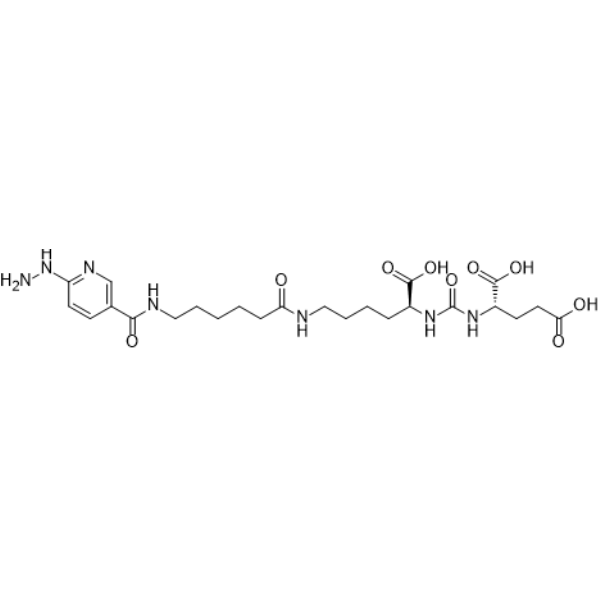
HYNIC-PSMA is a ligand for molecular imaging of tumors. Hynic-psma consists of two components: HYNIC (6-hydrazinonicotinamide) and PSMA (Prostate-Specific Membrane Antigen). HYNIC is a compound used to attach radioactive isotopes to targeted molecules, such as 188Re-HYNIC-PSMA. PSMA is a membrane antigen that is specifically expressed on the surface of prostate cancer cells. HYNIC-PSMA can be used in prostate cancer research . HYNIC-PSMA can be used for the synthesis/research of Radionuclide-Drug Conjugates (RDCs).
Art. -Nr.: HY-P5292A
CAS. Nr.: 2375849-11-7
Forschungsgebiete:  

Cancer

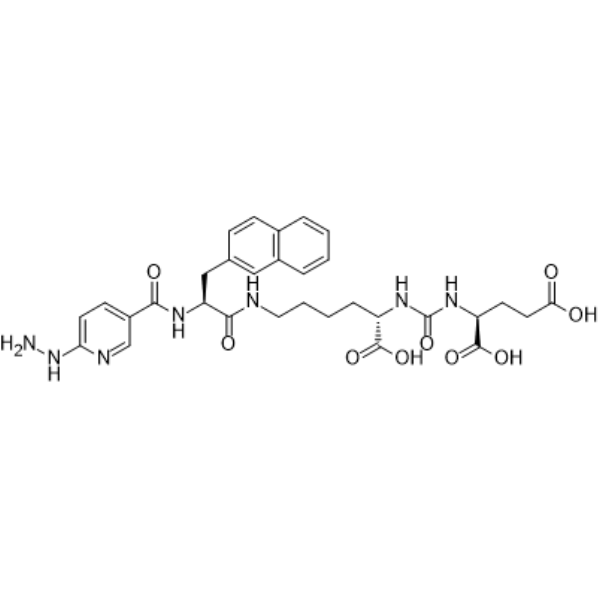
HYNIC-iPSMA TFA is a ligand for molecular imaging of tumors. Hynic-ipsma consists of two components: HYNIC (6-hydrazinonicotinamide) and iPSMA (Inhibitor of Prostate-Specific Membrane Antigen). HYNIC is a compound used to attach radioactive isotopes to targeted molecules. iPSMA is a specific inhibitor used to inhibit prostate-specific membrane antigen (PSMA). 68GA-labeled iPSMA has been used to detect prostate cancer by PET imaging. The further 99mTc-EDDA/HYNIC-iPSMA TFA has excellent specificity and sensitivity . HYNIC-iPSMA TFA can be used for the synthesis/research of Radionuclide-Drug Conjugates (RDCs).
Art. -Nr.: HY-P5292
CAS. Nr.: 2192215-74-8
Forschungsgebiete:  

Cancer

HYNIC-iPSMA is a ligand for molecular imaging of tumors. Hynic-ipsma consists of two components: HYNIC (6-hydrazinonicotinamide) and iPSMA (Inhibitor of Prostate-Specific Membrane Antigen). HYNIC is a compound used to attach radioactive isotopes to targeted molecules. iPSMA is a specific inhibitor used to inhibit prostate-specific membrane antigen (PSMA). 68GA-labeled iPSMA has been used to detect prostate cancer by PET imaging. The further 99mTc-EDDA/HYNIC-iPSMA has excellent specificity and sensitivity . HYNIC-iPSMA can be used for the synthesis/research of Radionuclide-Drug Conjugates (RDCs).
Art. -Nr.: HY-N1794
CAS. Nr.: 22697-65-0
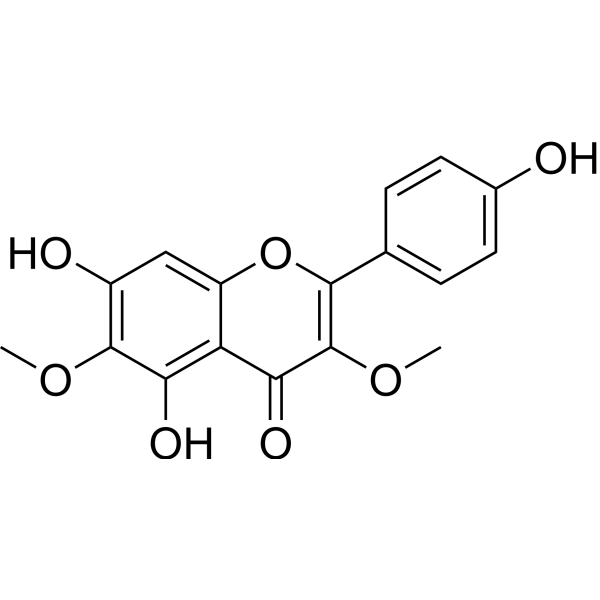
3,6-Dimethoxyapigenin is a flavone that can be isolated from Centaurea nervosa .
Art. -Nr.: HY-N11706
CAS. Nr.: 546-28-1
Synonyms: (+)-β-Cedrene
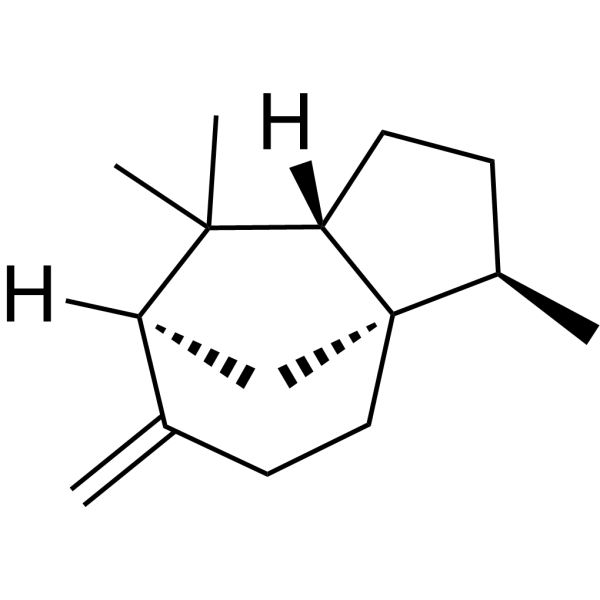
β-Cedrene ((+)-β-Cedrene) is a sesquiterpene compound that can be isolated from Centaurea kotschyi var. kotschyi and Centaurea kotschyi var. decumbens, exhibiting antibacterial, anti-inflammatory, antispasmodic, tonic, diuretic, sedative, insecticidal, and antifungal activities. β-Cedrene is also a potent competitive inhibitor of the CYP2B6-mediatedbupropion hydroxylase, with a Ki value of 1.6 μM .
Art. -Nr.: HY-111604
CAS. Nr.: 56882-00-9
Reinheit:  98.06%
Category:  

Marine natural products

Target:  

Others

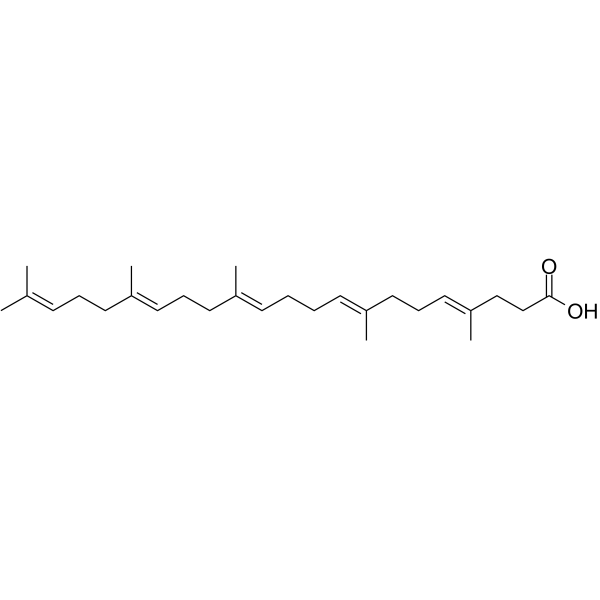
Turbinaric acid is a kind of secosqualene carboxylic acid. Turbinaric acid exhibits cytotoxicity against mouse melanoma cells and human colon cancer cells. Turbinaric acid can be used as a chemical marker for T. conoides. Turbinaric acid can be used for research on melanoma and colon cancer .
Art. -Nr.: HY-N10412
CAS. Nr.: 22489-66-3
Synonyms: Grosshemine
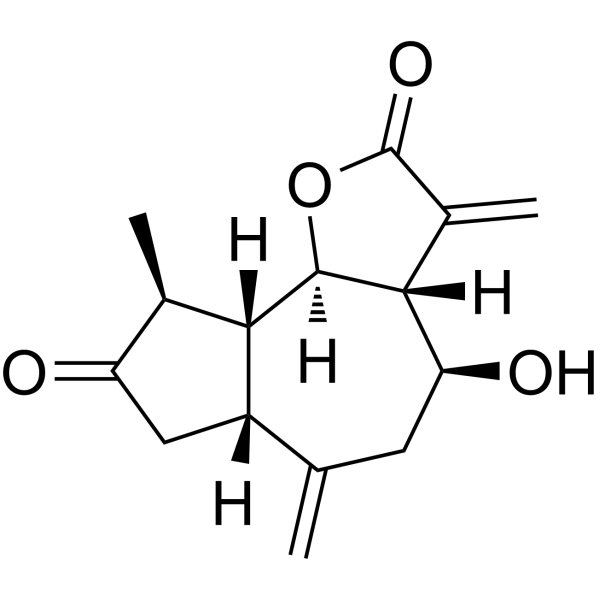
Grosshemin (Grosshemine) is a natural compound found in the Siberian population of Centaurea scabiosa .
Art. -Nr.: HY-N3730
CAS. Nr.: 67667-62-3
De-O-methylacetovanillochromene is a Phenols product that can be isolated from the herbs of Centaurea solstitialis L. .
Art. -Nr.: HY-N11717
CAS. Nr.: 352312-68-6
Bracteoside is a flavonoid glycoside found in the flowering aerial parts of Centaurea bracteata Scop. (Asteraceae) .
Art. -Nr.: HY-N18372
CAS. Nr.: 168207-86-1
Hispidulin 7-O-glucuronide methyl ester is a flavone glycoside. Hispidulin 7-O-glucuronide methyl ester can be found in the aerial part of Centaurea furfuracea .
Art. -Nr.: HY-N8855
CAS. Nr.: 19012-97-6
7-Hydroxy-2,2-dimethylchromene is a Phenols product that can be isolated from the herbs of Centaurea solstitialis L. .
Art. -Nr.: HY-N12476
CAS. Nr.: 86926-51-4
Tenaxin II (Compound 3) is a flavonoid compound found in the Scutellaria baicalensis Georgi. Flavonoids are a class of plant secondary metabolites with polyphenol structures, possessing antioxidant, anti-inflammatory, antimutagenic and anticarcinogenic properties, as well as the ability to regulate the function of key cellular enzymes .
  • 1

